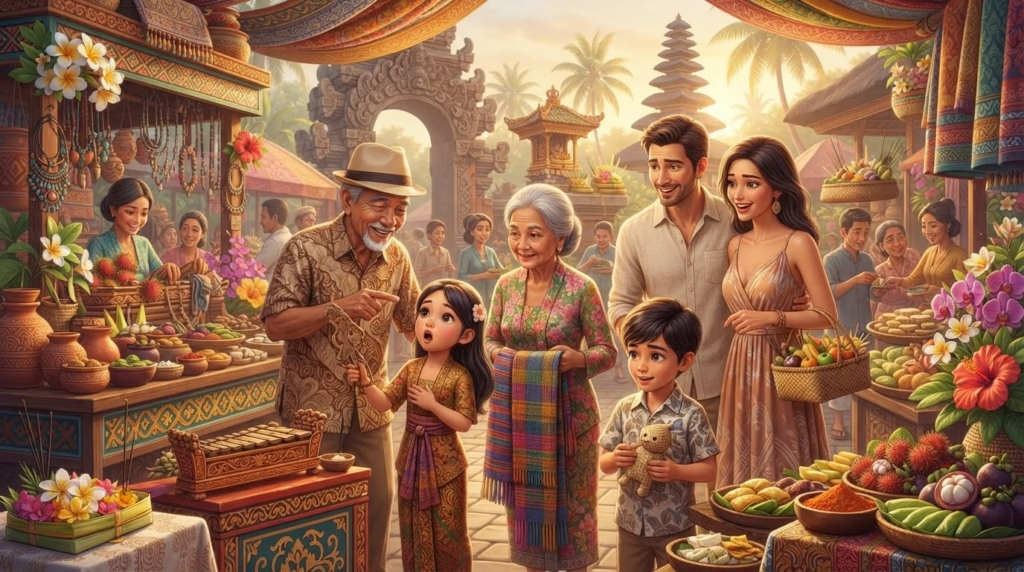
A family holiday in Kuta Bali can be much more than beaches, shopping, and water activities. Bali also offers many opportunities for families to discover local traditions, food, art, crafts, and everyday cultural life.
For parents, introducing children to Balinese culture can make a holiday more meaningful. Children can learn about local traditions while still enjoying activities that feel fun and accessible.
The experience does not have to involve a complicated cultural tour. Families can discover aspects of Balinese culture through local markets, traditional food, art, temples, community spaces, and respectful observation of daily life.
For families staying in Kuta, this can be especially convenient because cultural experiences can be combined with other holiday activities without requiring a long trip across the island.
How Can Families Experience Balinese Culture in Kuta?
Families can experience Balinese culture in several simple ways, including exploring traditional markets, trying local food, learning about Balinese crafts, visiting culturally significant places, and observing local customs respectfully.
The best approach is to make cultural exploration part of the holiday rather than treating it as a formal lesson.
For younger children, this might mean looking at colorful handmade crafts or trying a traditional snack.
For teenagers, it could involve photography, learning about local art, or exploring the history behind a destination.
For grandparents, cultural experiences can provide a slower-paced alternative to physically demanding attractions.
1. Start With a Local Market
A local market can be one of the easiest ways to introduce children to a destination.
Markets combine food, crafts, colors, sounds, people, and everyday activities in one place.
Instead of simply buying souvenirs, encourage children to look at how different products are made and displayed.
They can compare traditional crafts, identify different materials, and choose a small item that reminds them of the trip.
This also creates an opportunity to teach children about supporting local businesses and respecting handmade products.
The Kuta Art Market Guide provides more ideas for combining shopping with cultural exploration.
2. Turn Souvenir Shopping Into a Cultural Activity
Souvenir shopping does not have to be only about finding inexpensive gifts.
Families can use it as an opportunity to learn about Bali.
Before buying something, ask children:
- What material is it made from?
- Does it have a traditional design?
- Is it handmade?
- Who might use it?
- What does the design represent?
These simple questions can turn a normal shopping trip into a small cultural learning experience.
Older children can also research the meaning of certain Balinese motifs before or after visiting a market.
For more shopping ideas, see the Ultimate Guide to Souvenir Shopping in Kuta.
3. Introduce Children to Balinese Food
Food is another natural way to experience culture.
Instead of ordering only familiar international dishes, encourage family members to try one local food during the trip.
Children do not need to try everything.
Start with familiar flavors and let them decide how adventurous they want to be.
Families can explore dishes such as nasi campur, satay, fried rice, chicken dishes, or other local specialties.
The experience becomes more interesting when parents explain where the food comes from and how it is traditionally served.
For a practical overview of local dishes, read the Kuta Bali Family Food Guide.
Families looking for halal dining options can also use the Kuta Bali Halal Food Guide.
4. Learn Through Balinese Art
Art provides another accessible introduction to Balinese culture.
Families may encounter paintings, wood carvings, woven products, sculptures, decorative objects, and other forms of traditional craftsmanship during their holiday.
Children can be encouraged to observe shapes, colors, patterns, and materials.
Teenagers may enjoy photographing details of artwork or learning more about the techniques used by local artists.
Parents can keep the explanation simple.
The goal is not to memorize a long list of art terms. Instead, it is to help children understand that the objects around them may have cultural meaning and history.
5. Explore Cultural Details at the Kuta Art Market
The Kuta Art Market can be particularly useful for families who want to combine cultural discovery with a practical shopping trip.
The market offers an opportunity to see traditional-inspired souvenirs and local products while exploring an area near the beach.
Children can look for items that are visually interesting, while parents can explain that souvenirs can represent a destination’s identity.
This is also a good place to practice responsible shopping.
Teach children to compare products, ask questions politely, and respect sellers.
6. Learn How to Behave Respectfully Around Temples
One of the most important cultural lessons for children is understanding that Bali has many sacred spaces.
Families may encounter temples, shrines, offerings, and religious activities while walking around the island.
Parents should explain that these places are part of everyday spiritual life for many Balinese people.
When visiting a temple or sacred area, follow the site’s rules and dress requirements.
Children should understand that some areas may not be accessible to visitors.
Photography should also be handled respectfully. If there is uncertainty about whether photography is appropriate, ask or follow posted instructions.
The lesson is simple: being a respectful visitor is part of experiencing a culture.
7. Explain Balinese Offerings to Children
Families visiting Bali may notice small offerings placed outside homes, shops, and other locations.
These offerings can attract children’s attention because of their flowers, colors, and arrangement.
Parents can use this as a simple opportunity to explain that the offerings are connected to Balinese Hindu religious practices.
The explanation does not need to be complicated.
Children can simply learn that the objects they see are meaningful to local people and should not be touched or moved.
This is an easy example of how cultural learning can happen naturally during an ordinary walk.
8. Look Beyond Tourist Attractions
Families sometimes assume that cultural experiences require visiting a famous attraction.
They do not.
Some cultural observations happen during ordinary moments.
A walk through the neighborhood can reveal traditional architecture, offerings, local food preparation, ceremonies, crafts, and community activities.
The important thing is to observe without interfering.
Parents can encourage children to notice their surroundings while explaining that visitors should respect private homes and personal activities.
9. Give Teenagers a Cultural Photography Challenge
Teenagers may respond well when cultural exploration becomes an interactive challenge.
Give them a simple photography assignment.
For example, ask them to find:
- Three examples of traditional patterns.
- Three different types of local food.
- One interesting piece of craftsmanship.
- A colorful market scene.
- A traditional architectural detail.
- A respectful family photograph connected to the destination.
The challenge encourages them to observe rather than simply walk through the area.
For more photography ideas, read the Kuta Bali Family Travel Photography Guide.
10. Combine Culture With a Beach Day
Families do not have to dedicate an entire day to cultural activities.
Instead, combine different experiences.
For example, a family could spend the morning exploring Kuta, have lunch featuring local food, visit a market in the afternoon, and finish the day at the beach.
This combination works particularly well for children because the day contains different types of activities.
For families who want more beach ideas, explore the Kuta Bali Family Beach Guide.
11. Use Food as a Cultural Conversation
Dinner can become an easy cultural activity.
Instead of simply eating, talk about the food.
Ask children what ingredients they recognize.
Discuss whether the flavors are similar to food they eat at home.
Talk about how food is presented.
Older children can search for information about the dish later.
This creates a natural conversation without making the experience feel like school.
12. Introduce Children to Balinese Craftsmanship
Craftsmanship can help children understand the time and skill behind products they see in shops.
Wood, fabric, metal, stone, and natural materials can all be used in different forms of Balinese craftsmanship.
When buying a handmade souvenir, parents can explain that the product represents someone’s time and skill.
This can also encourage children to value quality and craftsmanship rather than simply choosing the cheapest item.
13. Make Cultural Learning Age-Appropriate
Not every child needs the same explanation.
Toddlers can focus on colors, sounds, textures, and simple observations.
Young children can learn about local food, crafts, markets, and basic cultural etiquette.
Teenagers can explore history, photography, architecture, art, and more detailed cultural topics.
Grandparents may enjoy sharing their own experiences of culture and travel while exploring Bali with younger generations.
This approach allows the entire family to participate without expecting everyone to learn the same thing.
For more multi-generational activity ideas, see Kuta Bali Family Activities for Different Ages.
14. Encourage Children to Ask Questions
One of the easiest ways to make cultural exploration meaningful is to let children ask questions.
They may wonder why certain flowers are used in offerings, why buildings have particular shapes, why people wear certain clothing, or why particular foods are prepared in a certain way.
Parents do not need to know every answer.
When appropriate, look for reliable information together or ask a local guide.
The goal is to create curiosity.
A child who becomes curious about a culture during a holiday may continue learning about it after returning home.
15. Respect Cultural Activities You Encounter
Families should remember that Bali is not simply a tourist destination.
People live, work, worship, and raise their families there.
Visitors may encounter religious ceremonies or cultural activities that are not intended as entertainment.
If your family sees such an activity, observe from an appropriate distance and follow local guidance.
Do not interrupt ceremonies for photographs.
Do not touch religious objects.
Do not enter restricted areas.
Parents can explain these rules to children before exploring the area.
This helps younger travelers understand the difference between observing a culture and treating it as a performance.
16. Add a Cultural Experience to a Short Kuta Trip
Even families visiting Kuta for only two days can include cultural experiences.
For example:
Day 1: Arrive, relax, visit the beach, enjoy local food, and explore an evening market.
Day 2: Have breakfast, visit a family attraction, explore a local market or art area, try another local dish, and finish with a beach walk.
This approach adds cultural elements without requiring a separate cultural-tour day.
For more ideas about planning a short holiday, see the Kuta Bali Family Weekend Itinerary.
17. Choose Accommodation That Supports Family Time
After exploring Bali, families need a comfortable place to return to.
This becomes particularly important when parents are traveling with children or when several generations are staying together.
A villa can provide a shared environment where everyone can relax after a day of cultural exploration.
VILLAKU is designed for up to 10 guests and has four air-conditioned bedrooms, three modern bathrooms with hot water, a fully equipped kitchen, 24-hour Wi-Fi, a washing machine, television, and parking for up to four cars.
These practical facilities can help families maintain comfortable routines while exploring Kuta.
18. Plan a Cultural Evening at the Villa
Cultural learning does not have to end when you return from sightseeing.
Families can spend a quiet evening talking about what they saw during the day.
Ask children:
- What was the most interesting thing you saw?
- What food did you enjoy most?
- Which souvenir caught your attention?
- What did you learn about Bali?
- What surprised you?
Teenagers can also organize their photographs and create a small digital travel album.
This turns individual experiences into a shared family memory.
For more ideas about relaxing together at your accommodation, see 6 Fun Things to Do Inside Your Private Villa.
Interesting Fact About Balinese Culture
Some of the most noticeable cultural details in Bali are part of everyday life rather than special tourist attractions.
Visitors may encounter offerings, traditional designs, local food, architecture, and community activities while simply walking around.
This means families do not always need to travel far to begin learning about Balinese culture.
Sometimes, slowing down and paying attention to the surroundings can provide the most accessible cultural experience.
How to Make Cultural Travel Fun for Children
Cultural travel becomes easier for children when parents avoid making every experience feel like a lesson.
Use simple activities.
Let children choose a souvenir.
Ask them to identify colors and patterns.
Allow them to taste a new food.
Give teenagers a photography challenge.
Ask everyone to share one thing they learned at dinner.
Small activities can make cultural discovery feel natural.
Simple Cultural Etiquette Checklist for Families
Before exploring Kuta and other parts of Bali, remind children and teenagers to:
- Respect temples and sacred spaces.
- Follow dress requirements where applicable.
- Do not touch religious offerings.
- Ask before photographing people when appropriate.
- Do not interrupt ceremonies.
- Follow signs and local instructions.
- Respect private homes and property.
- Keep public areas clean.
- Speak politely with local people.
- Ask questions respectfully.
These simple habits can help families become more thoughtful travelers.
Final Thoughts
A family holiday in Kuta Bali can be an opportunity to discover much more than beaches and attractions.
Local markets can introduce children to crafts and everyday commerce. Food can open conversations about local traditions. Art can encourage curiosity. Cultural sites can teach children about respect. Even a simple walk can reveal details of Balinese life that visitors might otherwise overlook.
The key is to keep the experience accessible.
Families do not need to become experts in Balinese culture during one vacation. Instead, focus on observing, asking questions, trying something new, and treating local traditions with respect.
By combining cultural experiences with beaches, food, shopping, and family activities, your Kuta holiday can become both enjoyable and educational.
And after a day of exploring, having a comfortable family base such as VILLAKU gives everyone a place to rest, share stories, and enjoy time together before the next Bali adventure.